


Key Takeaways
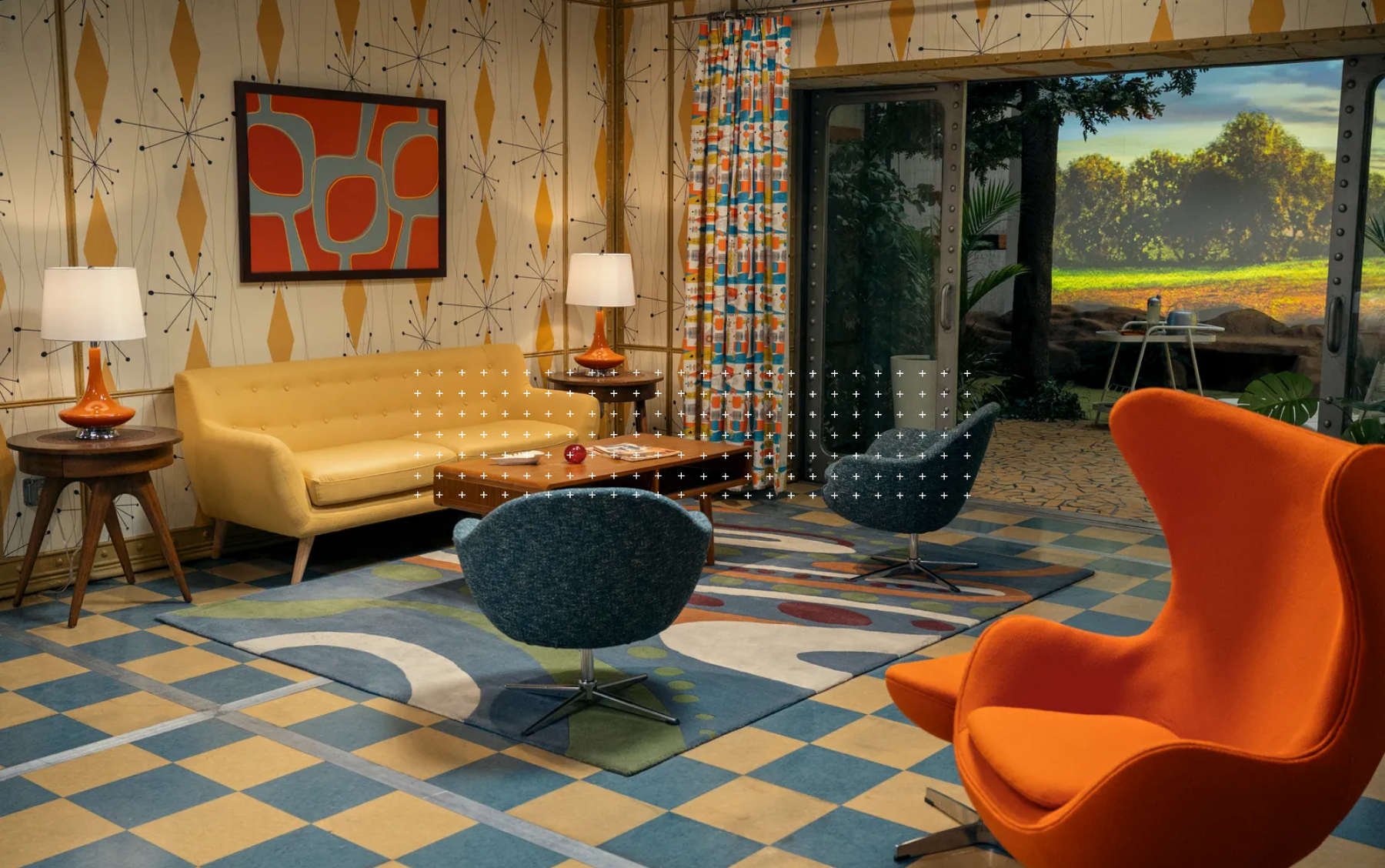
As designers, we often look to media for inspiration. Television, film, books, and music have the ability to spark new ideas and challenge the way we think about space. This month, we found ourselves drawn to the critically acclaimed series Fallout. Although the story is set in the year 2296, the show’s set designs are unmistakably rooted in the visual language of the 1960s. The result is a future reimagined through a distinctly mid-century perspective. See reference
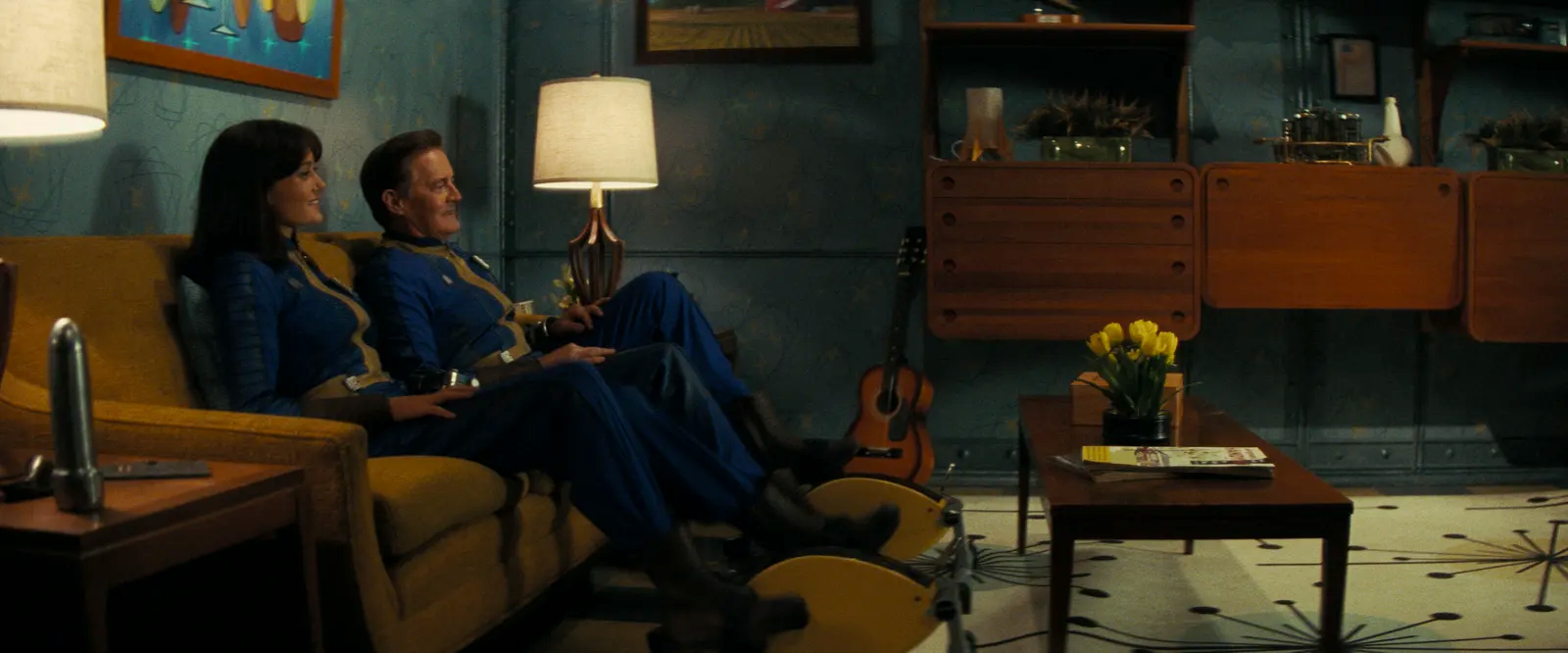
Much like The Jetsons or The Incredibles, the aesthetic embraces Retrofuturism, which is a movement that interprets the future through the imagination of the past. Simply put, Retrofuturism celebrates yesterday’s vision of tomorrow. Emerging during the Space Age, the style combines streamlined modernism with playful sci-fi expression. Starburst motifs, atomic geometries, sculptural silhouettes, and high-gloss reflective finishes define the style. Materials such as molded plastic, chrome, and fiberglass further reinforce its forward-looking feel.
Prominent figures of the movement, including Eero Saarinen, Verner Panton, and Joe Colombo, created work in the mid-twentieth century that still feels futuristic by today’s standards. Their designs pushed boundaries in form, function, and materiality, and their work demonstrates that true innovation is timeless.
It is to no one’s surprise that the Retrofuturistic aesthetic is seen so readily in contemporary film and television because Retrofuturism tells a compelling story. It is a narrative that is grounded in the comfort of nostalgia yet focused on the promise of possibility. Retrofuturistic design allows us to feel connected to the past while envisioning what lies ahead.
*All rights and credits are reserved to the respective owner(s).
